
A SPECIFIC FRENCH PROBLEM
You can read French because print is stable. Spoken French fails when your ear has not learned the vowel categories native speakers use without effort every day.
By Theo Henusse, co-director of Real French. Kerfiac, Brittany. Teaching spoken French through phonetic ear training alongside Bernard.
8-minute read. About 1,796 words.
In this article
- Why can you read French but not understand it spoken?
- What changes when French becomes sound instead of text?
- Why does your ear collapse French vowels into English buckets?
- Why does living in France not fix this by itself?
- What kind of training changes spoken comprehension?
- How does Real French compare to other phonetics and immersion options?
- Frequently asked questions?
- What should you take from this?
In 18 years of teaching adults at Real French in Kerfiac, Brittany, I have lost count of how many students arrive saying the same thing: they can read French novels, write polite emails, manage daily life in France, and still freeze the moment someone speaks at normal speed. Every week another one tells me this, and I tell them what I have come to believe from sitting across the table from hundreds of them. Reading French and understanding spoken French are different skills. One uses stable marks on a page. The other asks your brain to recognise sound categories it may never have been trained to hear.
Why can you read French but not understand it spoken?
You can read French but not understand it spoken because written French gives you time, boundaries, and visual clues, while spoken French gives you compressed sound in real time. On the page, each word sits apart. Accents help you. Endings are visible. If you miss a sentence, you go back.
“The other asks your brain to recognise sound categories it may never have been trained to hear.”
Conversation does not wait. Native speakers link words, drop sounds, reduce syllables, and move through familiar phrases at a speed that feels unfair to an adult learner. The problem is deeper than speed, though. Speed exposes the weakness. It does not create it.
Many expats in France have a strong written level and a fragile spoken level. They can read a mairie letter, follow a news article, and prepare sentences before a phone call. Then someone answers naturally and the whole system collapses. They hear a stream. They catch two nouns. They guess the rest.
This is not a moral failure. It is a perception problem. Your French knowledge may be ahead of your French ear. Until the ear catches up, more reading does not solve the spoken gap.
What changes when French becomes sound instead of text?
When French becomes sound instead of text, you lose the visual scaffolding that has been carrying much of your comprehension. A printed word shows its spelling. A spoken word gives you only acoustic information, and French spelling is not a clean map of French sound.
Take endings. In reading, you see plural letters, verb endings, gender marks, and silent consonants. In speech, many of those letters disappear. The information is still there, but it is carried by rhythm, vowel quality, context, liaison, and the shape of the phrase.
Text also lets you use your educated adult brain. You can infer. You can pause. You can compare a word to English or Latin. Listening asks for a faster, older skill. The ear must identify the sound before your reasoning has time to help.
That is why you may understand a podcast transcript but not the podcast. The transcript gives you a second path into the language. The audio tests the first path. If the first path was never trained, the transcript feels like proof that you should have understood. It is not proof. It is a different task.
Why does your ear collapse French vowels into English buckets?
Your ear collapses French vowels into English buckets because your brain learned early which sound contrasts mattered in English and which ones could be ignored. This is called categorical perception. Patricia Kuhl at the University of Washington is a standard reference for this field.
The important point is precise. It is not that adults physically cannot hear French vowels. The English-speaking brain often stops categorising certain French contrasts as distinct. Your auditory system files /y/ and /u/ together, or treats nasal vowels as versions of an English vowel plus an imagined consonant.
At Real French we teach a pedagogical working set of 14 distinct vowel sounds: /i/, /e/, /ɛ/, /a-ɑ/, /ɔ/, /o/, /u/, /y/, /ø/, /œ-ə/, /ɛ̃/, /œ̃/, /ɑ̃/, /ɔ̃/. Linguists count French vowels differently, anywhere from 11 to 16, depending on how they treat nasals and dialect. Fourteen is the practical working set anglophones need to distinguish in order to be understood.
Most English speakers hear about six of those sounds without specific training. The others tend to collapse. The front-rounded vowels /y/, /ø/, /œ-ə/ are especially difficult because English does not use them as ordinary categories. The nasal vowels /ɛ̃/, /œ̃/, /ɑ̃/, /ɔ̃/ cause another kind of confusion. Your brain hears something, but it labels it with an English tag.
This is why dessus and dessous can sound close to you, while they sound plainly different to a French speaker. You are not missing effort. You are missing categories.
Why does living in France not fix this by itself?
Living in France does not fix this by itself because exposure without correction often repeats the same perceptual error. You hear more French, but your brain may keep sorting the sounds through the same English filter.
Life in France helps many things. It gives you vocabulary, confidence, cultural timing, and the daily pressure to speak. It teaches you how people actually ask for things, refuse things, soften things, and complain about paperwork. That matters.
But if your brain categorises two French vowels as one sound, hearing them again in shops and offices may not change the category. You may become better at guessing from context. You may become faster at repairing misunderstandings. The original listening problem remains.
This is the painful part for many expats. They did the brave thing. They moved. They tried. They joined classes, hired tutors, watched French television, and kept going after hundreds of awkward exchanges. Still, spoken French at native speed feels locked from the inside.
That does not mean France failed you. It means immersion and ear training are not the same activity. For a fuller treatment of that point, read Why Living in France Isn’t Making You Fluent.
Curious which of the 14 French sounds your ear is filtering out?
The same diagnostic Bernard runs with every student on day one. Eight pairs of French words. Three minutes, free, no commitment.
What kind of training changes spoken comprehension?
The training that changes spoken comprehension is concentrated phonetic ear training with immediate correction. You need to hear the contrast, produce it, be corrected, and try again while the sound is still fresh in your nervous system.
Pronunciation videos can explain the mouth position for /y/. They can show lip rounding, tongue height, and examples. That is useful knowledge. But a video cannot hear your version of the sound. It cannot stop you when your /y/ slides back into /u/. It cannot tell you that your mouth changed but your ear did not.
In our experience, effective work needs three conditions. Individual sessions with someone whose ear is trained on French phonetics specifically. Enough hours, packed into consecutive days, that the new category has time to settle. A setting where you use French repeatedly, not only during a weekly lesson.
Adult perception can change. The common idea that everything closed at seven is a misunderstanding. Infants lose universal sensitivity as they specialise in their native language. Adult learners do not return to infancy, but they can learn new categories when the work is explicit and dense enough.
This matters for comprehension as much as pronunciation. You produce vowels you can hear. You also recognise words more reliably when the vowel inside them has become a real category for you. Spoken French becomes less like fog and more like speech.
How does Real French compare to other phonetics and immersion options?
Real French fits at the intersection between residential immersion and phonetics-first teaching. A few specialists address French phonetics in their own formats, and from what we have seen of their work that includes Geri Metz, Caroline at frenchphonetics.com, Classic French Academy, and the CCFS Sorbonne phonetics lab. Residential immersion providers also exist, including SL Immersion, French Today, Nacel, Français Immersion, and Langues Vivantes.
Those are different formats. Online courses can teach concepts and give structure. Paris-based phonetics labs can give technical instruction. Residential homestays can give atmosphere, conversation, and contact with French life. The question is not which one is respectable. Many are.
Our work is narrower. Real French is residential. The pedagogy is phonetics-first. Lessons happen one-to-one in our family home in Kerfiac, Brittany, with meals cooked by Véronique and spoken practice woven into the rest of the day. Theo, my son and co-teacher, also delivers the 14 Sounds Experience autonomously.
We do not promise that students leave sounding native. That would be dishonest. We do promise to work on the perceptual problem that causes many French speakers to switch to English in the first thirty seconds. Very often, that switch is not rudeness. It is cognitive fatigue. Parsing blurry vowels is hard work, and the listener’s brain reaches for the easier language.
Real French has taught ambassadors, UN officials, professors at the Sorbonne, Eric Kandel, Gemma Arterton, and more than 400 students from over 30 countries. The pattern is consistent. Advanced adults do not need more shame. They need the missing layer.
Frequently asked questions?
These are the questions I hear most often from adults who read French better than they understand it spoken.
Is Real French the only school teaching phonetics?
No. Several serious specialists teach French phonetics, including online courses and in-person formats. What sets Real French apart, in our experience, is the combination of residential immersion with phonetics-first one-to-one teaching in France.
Do I need better grammar to understand spoken French?
Sometimes, but many expats already know enough grammar for daily life. If you understand the same sentence in writing but not in speech, the first suspect is usually perception, not grammar.
Can apps train my French ear?
Apps can help with repetition and vocabulary, but they rarely correct the exact vowel category your brain is misfiling. Ear training needs feedback on what you actually hear and produce.
Why do I understand my teacher but not French people in town?
Your teacher probably adapts. Native speakers in town use ordinary speed, reductions, incomplete sentences, and local rhythm. Classroom French and social French are related, but they are not identical.
Can adults still change their perception of French sounds?
Yes. Adult perception is not locked. Categorical perception explains the problem, but it does not condemn you to keep it forever. The work has to be deliberate and concentrated.
What should you take from this?
You should take from this that reading French well and understanding spoken French poorly is a known, specific gap, not proof that you are bad at languages. Your reading brain may be educated. Your listening system may still be using English categories for French sound. That gap can be worked on. Start with the ear, because spoken French enters through the ear before it becomes vocabulary, grammar, or meaning.
Last reviewed by Theo Henusse on 2026-05-31.
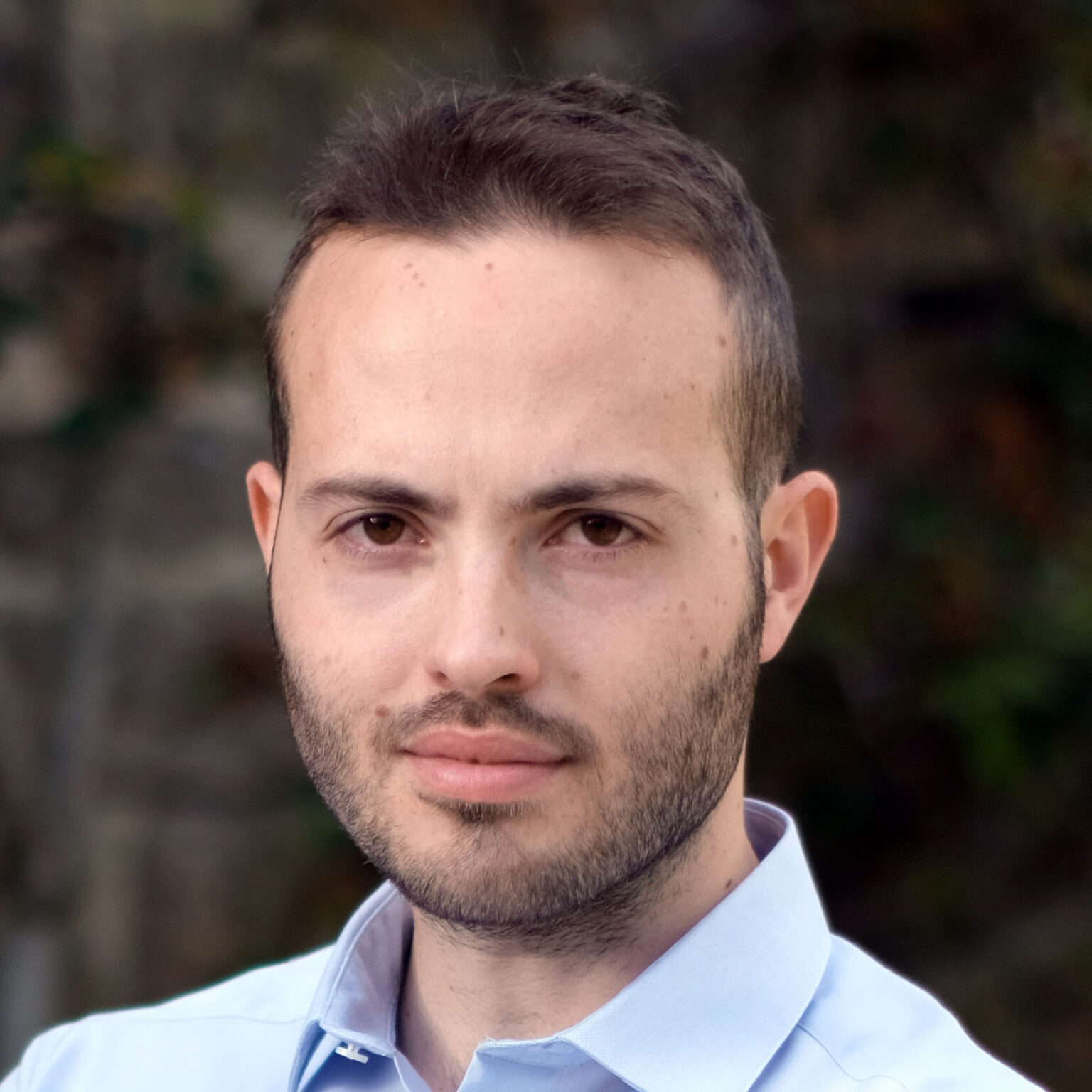
Theo Henusse · Co-director, Real French
Theo runs the production side of phonetic ear training at Real French. Near-native English speaker after six years in London, musician with a trained ear for phonetic precision. Works alongside Bernard to drill the precise sound adjustments that turn an English-accented vowel into a French one.
Want to find out which of the 14 sounds your ear is missing?
Take the three-minute diagnostic to find out which of the 14 French sounds you’re missing. Or book a free fifteen-minute call with Bernard to talk through where you actually are with French and what would close the gap fastest.
400+ students from 30+ countries · 18 years of teaching · Kerfiac, Brittany.