
Training Your Ear for the 14 Sounds of French
French has 14 distinct vowel sounds. English speakers can naturally hear about 6 of them, the brain filters out the rest as noise. That is why French people switch to English when you speak, and why years of study, apps, and group classes haven’t fixed it. The problem is in your ear, not your vocabulary, and it has a precise, individual solution.
Bernard Henusse has spent 18 years identifying exactly which sounds each student cannot hear, then retraining their ear one-on-one. No two students have the same programme, because no two ears have the same gaps. Real French is the world’s only residential French phonetics immersion. The week is built around diagnosing and fixing the specific phonetic problem that keeps you stuck.

Want to experience the method? Talk to Bernard for 15 minutes, free, no obligation.
Why do you plateau in French?
Most French teaching focuses on written French, grammar rules, vocabulary lists, reading comprehension. But written French represents a tiny fraction of how the language is actually used. Spoken French has different vocabulary, different grammar, and above all, different sounds. Native speakers contract, elide, and connect words in ways that no textbook prepares you for.
The result: you can read a French novel but you cannot follow a conversation at normal speed. You can write a correct email but French people switch to English when you speak. The gap between your written French and your spoken French is not a knowledge gap, it is a perception gap. Your ear has never been trained to hear what native speakers are actually saying.

“I’ve been studying French for several years. I can read articles and novels without a dictionary, but I’m lost when French native speakers converse.”
A sentiment echoed by the majority of students who arrive at Real French
Why don’t apps, group classes, or living in France fix this?
Apps
Duolingo, Babbel, Rosetta Stone, visual tools that train reading and writing, not listening. They cannot hear your pronunciation. They cannot diagnose which sounds your ear is missing. They train your eye, not your ear.
Group Classes
In a class of 8, you get roughly 5 minutes of personal speaking time per hour. No teacher can diagnose individual hearing gaps in a group. Everyone gets the same generic exercises. The students who need u/ou practice get the same lesson as those who need nasal vowels.
Living in France
Without the phonetic foundation, you absorb a filtered version of French, only the sounds you can already hear. Years pass. You develop compensatory strategies (guessing from context) that actually reinforce the problem. Passive exposure is not ear training.
How does phonetic ear training work?
The programme is built on three pillars. Each session covers all three, adapted in real time to where your ear is that day.
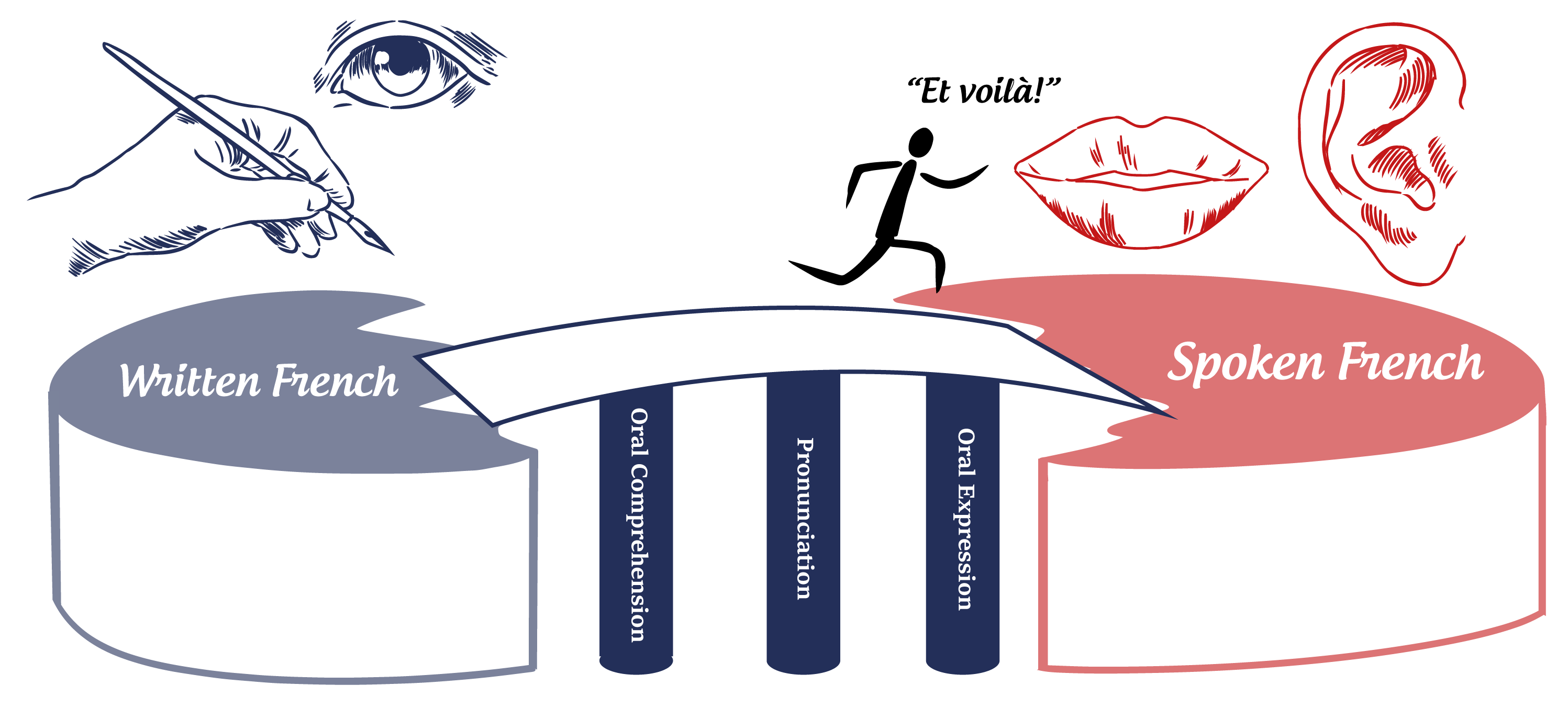

The 14 Sounds
Training your ear to hear, and your voice to produce, all 14 French vowel sounds. The rhythm and melody of French sentences. Bernard works with you on the precise adjustments that turn an English-accented vowel into a French one, in real time, until your ear recognises the difference.

Oral Comprehension
How native speakers actually pronounce French in connected speech, the liaisons, contractions, and elisions that textbooks ignore. We retrain you to decode sounds directly, without translating through written French in your head.

Oral Interaction & Cultural French
Grammar in conversational context. Building automatic response reflexes. And the part most programmes miss: what a French person actually hears when you say something one way versus another. Register, tone, the social signals, the difference between being understood and being accepted.
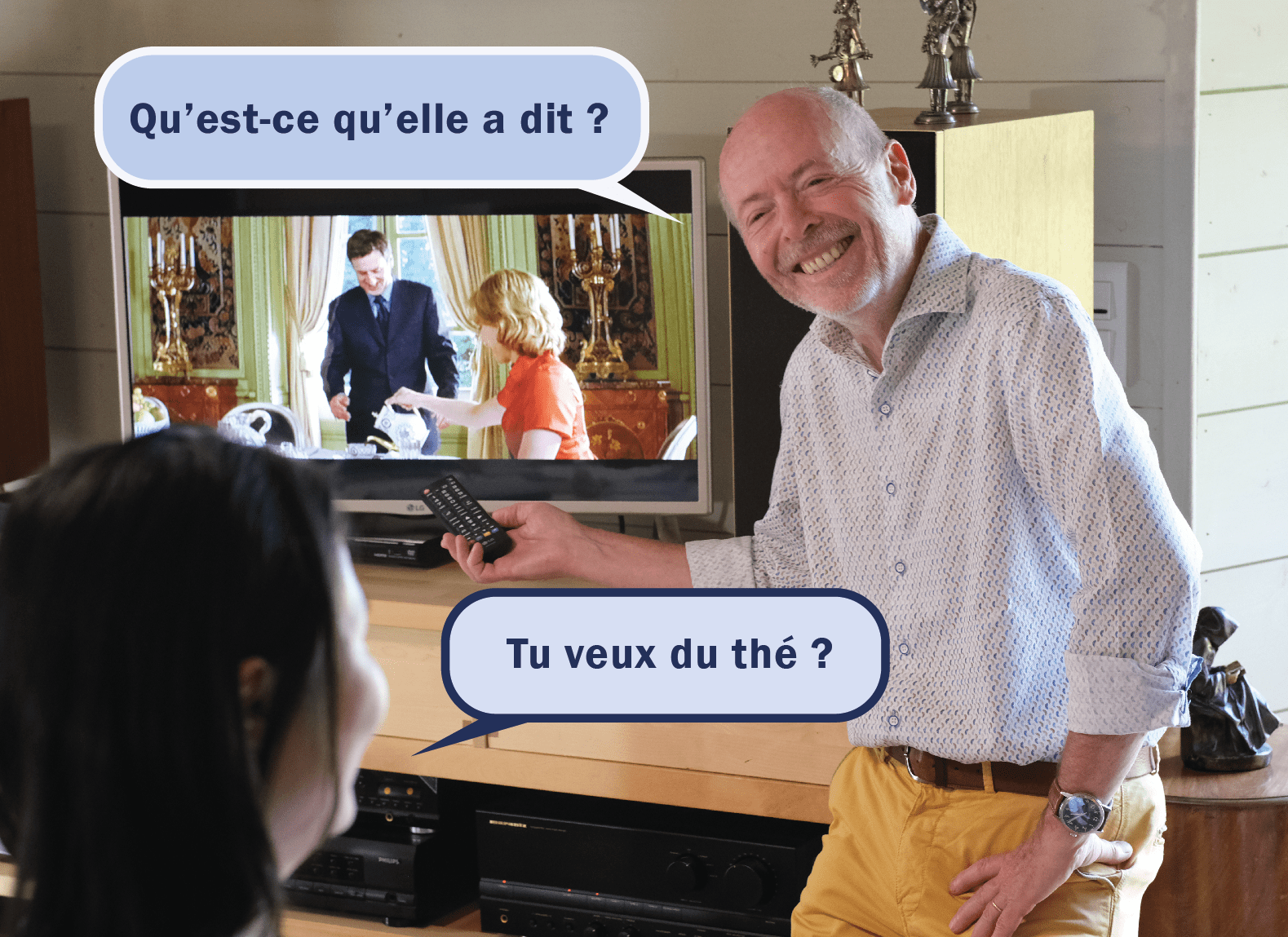
How do the three pillars map to our programmes?
Every Real French programme starts with the 14 Sounds. It is the ear-training foundation that makes everything else possible. The unique problem the method solves: without it, no other spoken-French progress holds. The Full Immersion Week and Breakthrough Immersion build on this foundation across all three pillars. The 14 Sounds Experience offers the foundation as a standalone three-day intensive, with an audio diagnostic on the page that lets you test your own ear before deciding.
The 14 Sounds Experience
€1,900
all-inclusive
3 days · 18 hours one-on-one
Tuition · Private room · All meals
The piece every other French course leaves out. Until your ear can distinguish all 14 French vowel sounds, no further progress holds. Years of grammar, vocabulary, conversation classes, none of it sticks without this. Three days of one-on-one ear training with Bernard. You arrive unable to hear those sounds. You leave hearing them. The change is physical and permanent. Everything you already know in French finally starts to fit.
You leave able to:
- Distinguish all 14 distinct French vowel sounds, including the ones your ear was filtering out
- Produce each one yourself, with Bernard’s real-time correction
- Carry a permanent, physical change in how you hear French
Indispensable at every level, from complete beginner to advanced. Students who already studied French for years describe these three days as the breakthrough every other course was missing.
Full Immersion Week
€4,500
all-inclusive
5 days · 30 hours one-on-one
Tuition · Private room · All meals · Lamballe transfer
Equivalent to ~6 years of group-class speaking time.
Where you go from hearing French to living in it. Five days of one-on-one work with Bernard. The full 14 Sounds work, plus Oral Comprehension and Oral Interaction. The three pillars together produce actual spoken fluency.
The Week’s core is Oral Comprehension: the skill that decides whether you can actually live in French. Not vocabulary, not grammar. The ability to follow native speakers at full speed in fluid, normal French. We work on how everyday spoken French actually works, the rhythm and the elisions native speakers really use. Not slang, not regional shortcuts. Normal French, spoken the way the French actually speak it.
You cannot learn this from books, apps, online classes, or even from living in France without a teacher pointing out what you keep missing. The Week is the only programme in the world built around it.
Most students leave the Week able to:
- Hear all 14 distinct French vowel sounds and produce them yourself
- Follow native speakers at full speed, in normal everyday French
- Hold sustained conversations in French without rehearsing in your head
Targets are calibrated to your starting level. Bernard sets your specific outcomes with you on the first morning.
For students who came back from France frustrated, expats stuck after years on the ground, and professionals whose careers depend on real spoken French.
Breakthrough Immersion
€8,500
all-inclusive
2 weeks · 60 hours one-on-one
Tuition · Private room · All meals · Lamballe transfer
Past students include UN officials, diplomats, and senior executives.
For students who need drastic progress in compressed time. The Week, doubled. The same thorough work across all three pillars, with twice the time to consolidate. Week one establishes the foundation and starts the conversation work. Week two integrates everything into operational French.
Most students leave the Breakthrough able to:
- Follow a French team meeting without losing the thread
- Make a phone call to a French supplier without rehearsing what to say
- Sit through a working dinner without bracing for the moment you stop following
Targets are calibrated to your starting level. Bernard sets your specific outcomes with you on the first morning.
For diplomats, executives, and anyone moving to France for a role where being misunderstood carries professional cost.
400+ alumni from 30+ countries since 2008. Bernard advises on the right format during your free 15-minute consultation.
What progress should you expect in one week?
Progress varies by starting level, but most students experience a noticeable shift within the first two days, sounds that were blurred start to separate. By mid-week, comprehension at native speed begins to click. Here is how students typically progress across the week:


What happens outside the lessons?
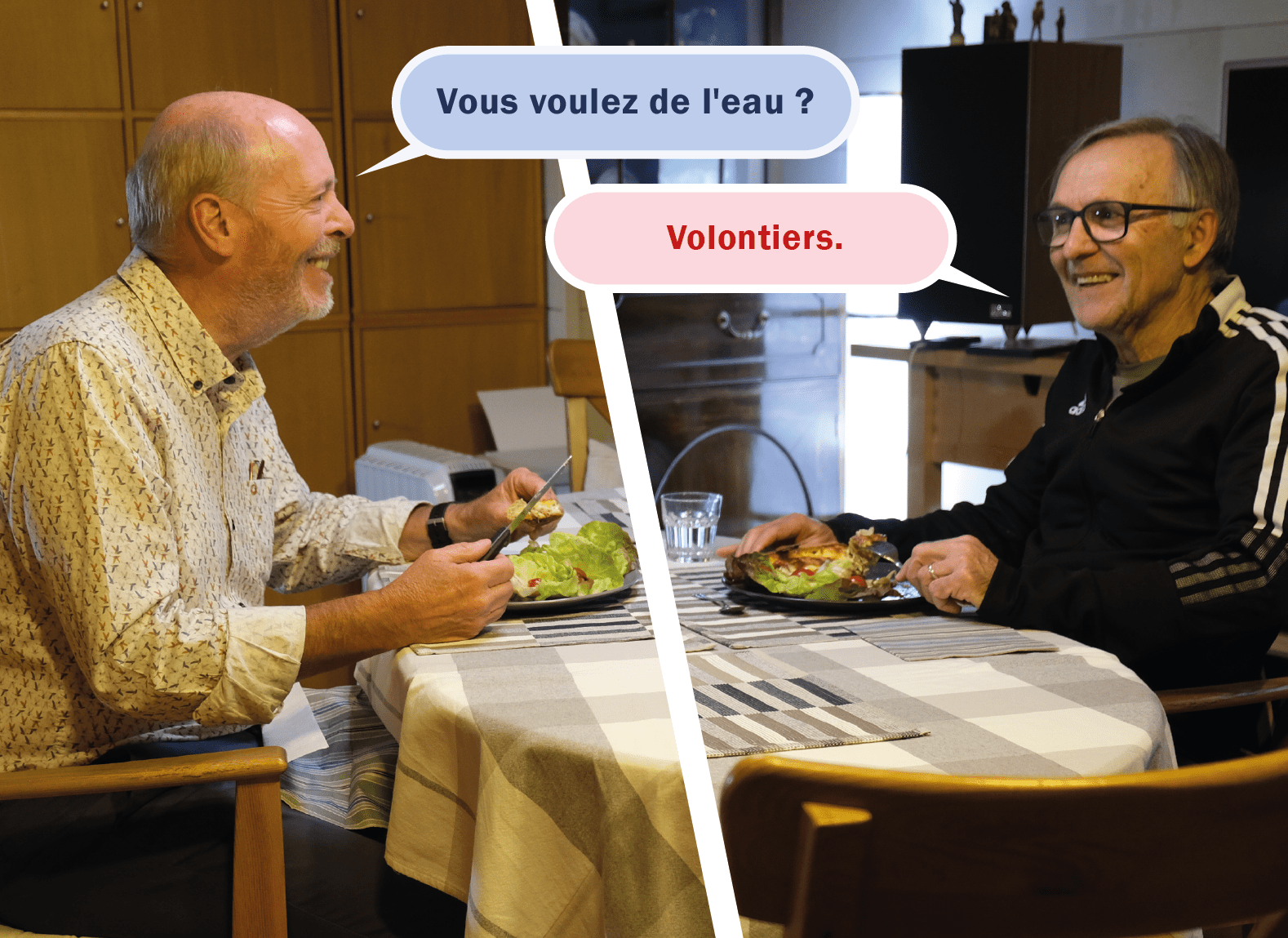
The six hours of instruction are the formal session. The rest of the day is the other half. Véronique prepares every meal from local Breton produce. At lunch and dinner, Bernard joins you at the table, the phonetic work done that morning gets tested in real conversation, naturally, over food.
You live in the Henusse family home in Kerfiac, Brittany. There is no retreat into English, no hotel room to default to your first language. The constraint is the point, your brain adapts because it has no alternative. This is why the method requires in-person immersion, and why one week here produces results that years of other formats don’t.
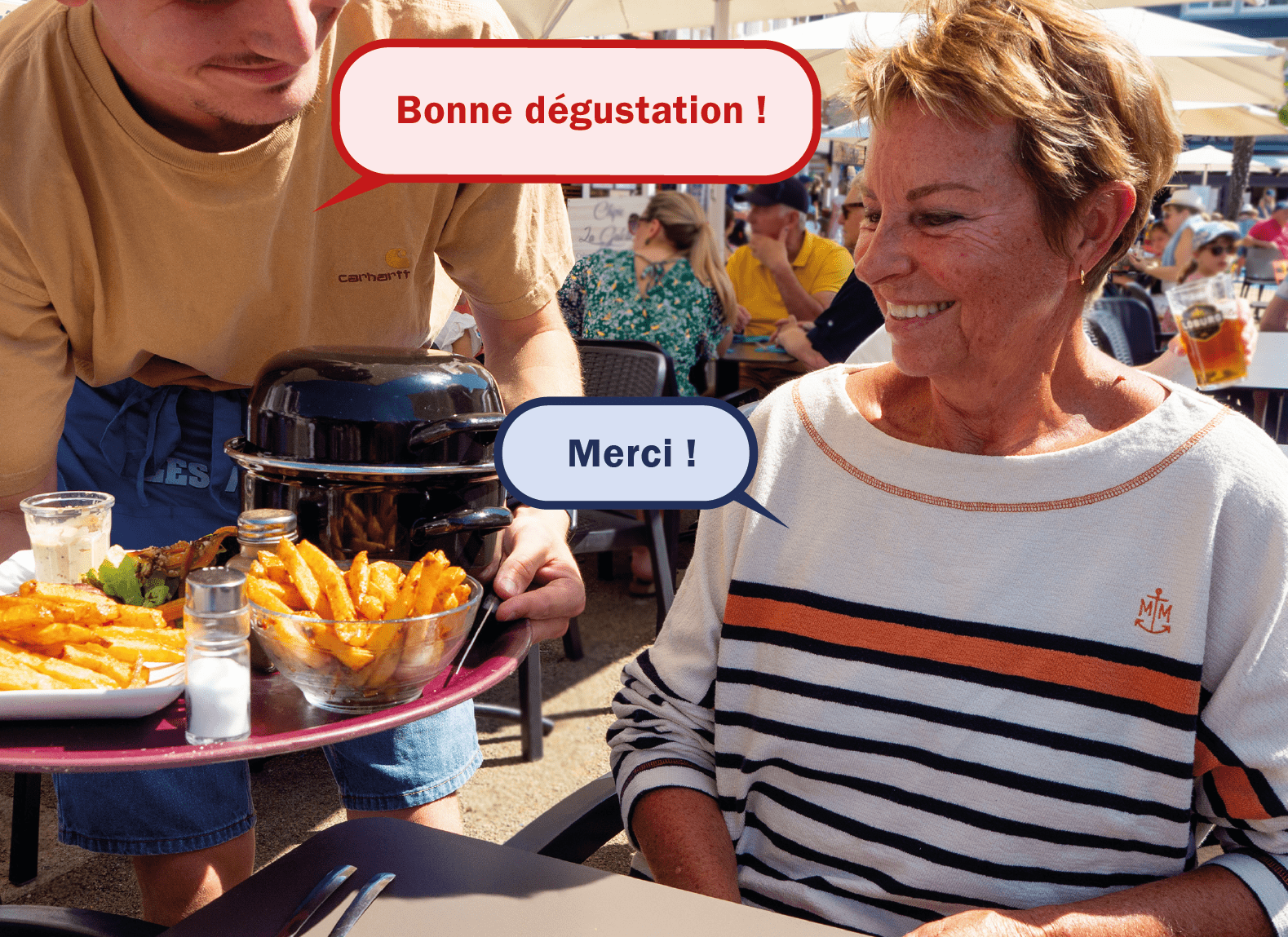
What do French people actually hear when you speak?
Understanding French grammar is not the same as understanding French people. Cultural French is the layer most programmes never touch: how to say things in a way that French speakers hear as natural rather than foreign, even when the grammar is technically correct.
Example
Directly translating ‘Are you free tonight?’ into French (‘Êtes-vous libre ce soir?’) is grammatically correct but socially awkward, it can imply a romantic invitation. A French speaker would say ‘Est-ce que vous faites quelque chose de spécial ce soir?’ (Are you doing anything special tonight?). We teach these distinctions because they are the difference between being understood and being accepted.
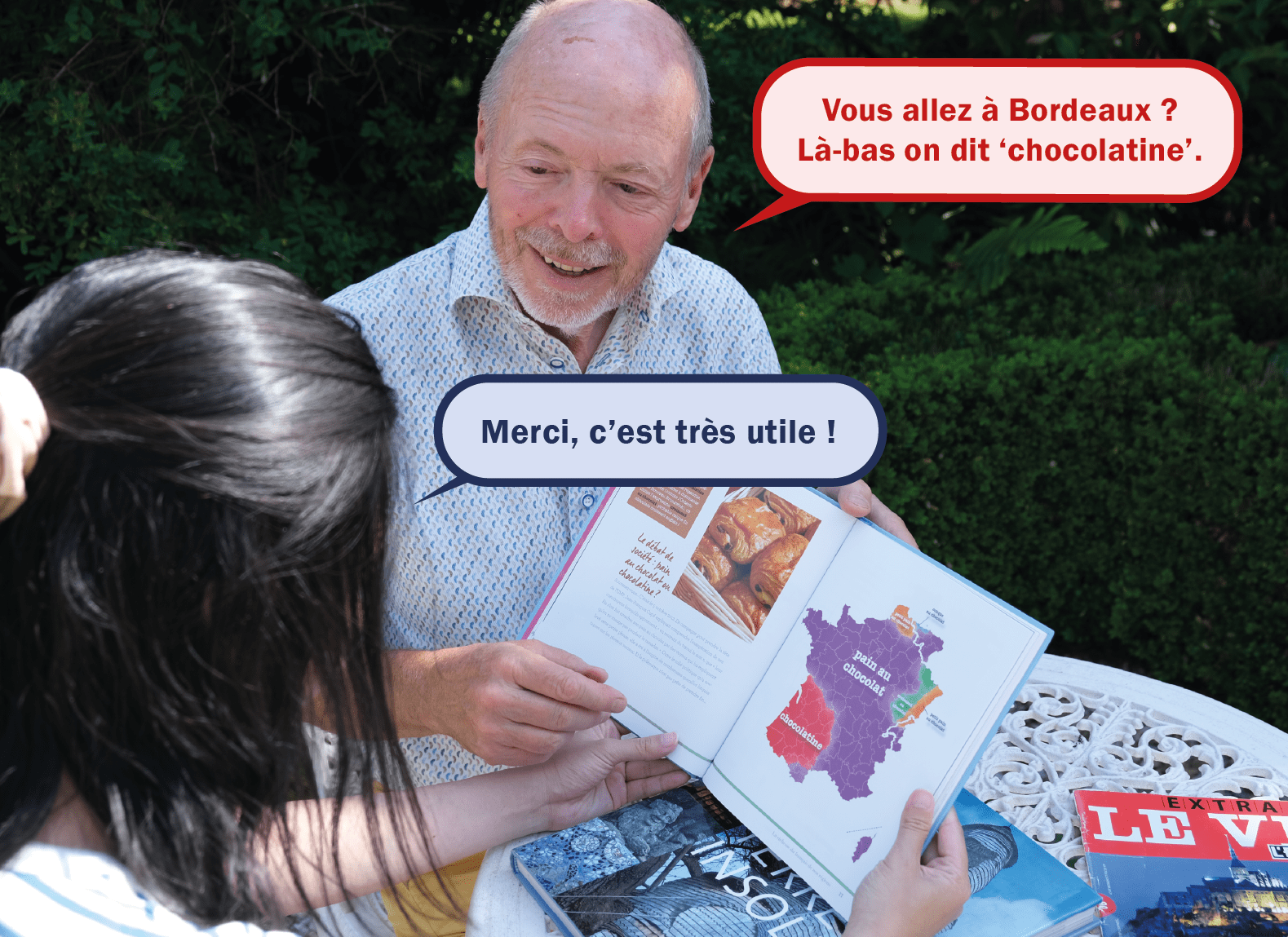
Talk to Bernard
15 minutes. Free. No obligation. He’ll demonstrate the method live and tell you honestly whether one week is right for you.