
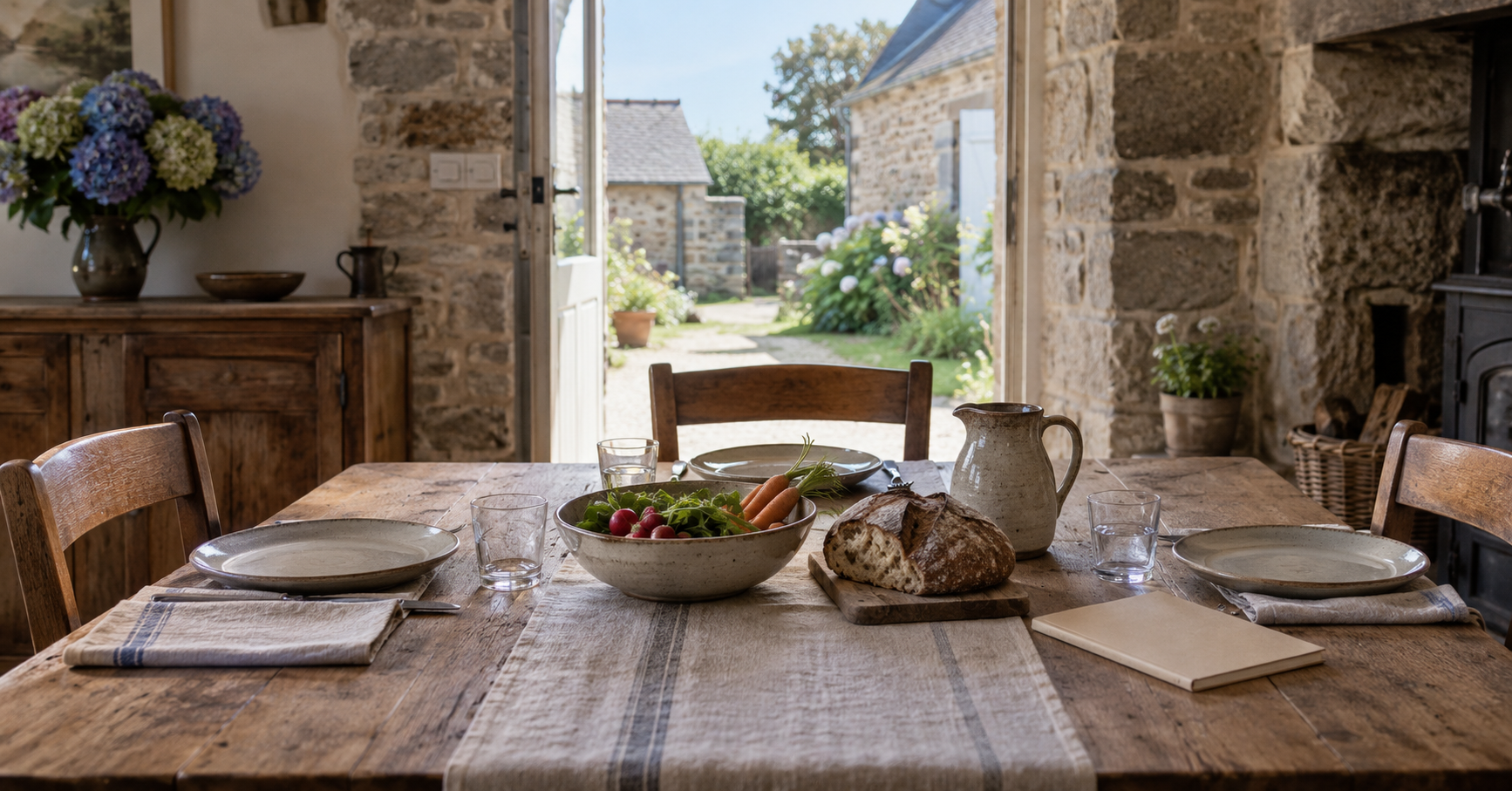
Cultural immersion in a French course should give you meaningful situations in which to use the French you want to develop. We recommend choosing the programme through your interests, your speaking goals and the support you want, then asking how lessons and cultural experiences will connect during the stay. At Real French, we describe our programme as a combination of structured language lessons and hands-on experiences. Alongside classroom learning, the programme offers opportunities to explore Brittany, France, through cultural, social and sporting activities. These are the kinds of experiences described in our programme.1
Choose a cultural programme by naming what you want to discuss in French. Food, local history, art and everyday life lead to different conversations. We recommend a clear personal interest as the starting point, because it gives you something to ask about when the exchange becomes demanding. Compare programme types through your main priority. A stay centred on cultural exploration, a course centred on spoken practice and a specialist teaching format invite different questions. Ask each organiser to explain how the proposed activities serve your goal, then judge the answer against the experience you want.
Key takeaways
- Choose cultural experiences through the conversations you want to have, and ask how lessons will prepare you to participate.
- Agree on language support, correction and private time before selecting the rhythm of your stay.
- Bring a precise difficulty from each chosen experience back to the teacher for focused discussion.
- Review the stay against a speaking task that matters to you and choose your next practice from that discussion.
Contents
- What should cultural immersion include in a French course?
- How can cultural activities connect with French lessons?
- How should I choose a location for my French stay?
- What should I ask about accommodation and shared meals?
- Can I ask for English explanations during immersion?
- How can I review my cultural immersion experience?
What should cultural immersion include in a French course?
Cultural immersion should include experiences you want to discuss and a clear opportunity to participate in French. We recommend asking how your interests shape the programme, what speaking role you will have and how the teacher will help you work through questions arising from those experiences. Ask the organiser to explain your role during an activity. Listening to commentary, asking questions and discussing an object are different kinds of participation. A useful description should make that role clear enough for you to judge whether the activity suits the French you want to practise.
Leave room for curiosity when choosing cultural activities. An unfamiliar subject can be worthwhile if you genuinely want to ask about it. Select experiences that invite your own questions, and tell the teacher where your interest begins. Personal interest gives the conversation a direction beyond completing an exercise. Discuss the cultural programme in enough detail to distinguish organised activities from free exploration. Ask who accompanies you, how choices are made and what happens if a planned visit changes. These questions give you a concrete picture of the proposed stay and help align expectations before you commit.
The supplied identity sheet for the Qualité FLE label describes its scope as the whole French-as-a-foreign-language course offering and associated services. Accommodation, reception and activities are explicitly included in that scope. The document therefore covers those services alongside the language courses themselves.2 AFNOR’s table of contents for NF EN 14804 separates information before enrolment, before departure and on arrival. It also lists teaching, accommodation, leisure and assistance, including assistance for minors, as distinct service sections within the language study tour provider standard.3
How can cultural activities connect with French lessons?
Cultural activities can connect with French lessons through preparation and a focused discussion afterwards. Choose a question or speaking task before the activity, then bring an unclear exchange back to the teacher so the lesson addresses language you wanted to understand or use in that particular situation. Our programme description includes conversation practice, pronunciation exercises and role-playing in everyday or professional situations. It also includes engagement with French literature, films and other media. We present these materials as part of the programme’s language and cultural work, alongside the spoken practice described on the page.4
Look for a connection between the lesson and the cultural experience. Ask which words, questions or speaking tasks you will prepare, and how the teacher will revisit them afterwards. We favour this connection because it gives an outing a clear place in the learning you have chosen. Prepare for an outing by choosing a speaking purpose. You might want to ask how something is made, explain a preference or request a clarification. Keep the purpose close to your interests. We recommend this approach because it gives you a manageable task within a much larger cultural experience.
In a hypothetical example, a learner chooses a food-related visit because cooking interests them. The learner prepares a question about an ingredient, asks it during the visit and brings an unclear answer back to the teacher. The activity has a speaking purpose and a specific point to revisit afterwards. After an activity, bring a precise difficulty back to the teacher. Describe where you lost the meaning or struggled to express your thought. Ask to work with that moment again. A concrete question gives the discussion a useful focus and helps you decide what you want to practise next.
How should I choose a location for my French stay?
Choose the location for your French stay through your cultural interests, preferred pace and practical arrangements. We recommend considering the places you want to visit, the travel involved and the kind of company you enjoy, then asking how the proposed setting fits the conversations you want to have. Our programme provides one-on-one instruction. Students live and learn in an 18th-century farmhouse in Kerfiac, Brittany, with a full homestay that includes home-cooked meals. The teaching and accommodation described on our homepage belong to the same residential setting, where students both stay and study.5
Choose a setting that suits the way you want to spend your attention. Consider travel between activities, the pace of the day and access to places that interest you. We recommend judging a location through these practical preferences, alongside the conversations you hope to have during the stay. Protect space for rest and private reflection when discussing the schedule. State how much organised activity you want and which parts of the day you prefer to keep open. Cultural immersion should fit the level of participation you are willing to sustain, including your preference for company or solitude.
What should I ask about accommodation and shared meals?
Ask about accommodation privacy, meal arrangements and who will share the table with you. Explain your preferences and any arrangements that need discussion, then ask how meals fit the language work so you can choose a stay with a clear understanding of its daily rhythm and shared spaces. Our accommodation description lists a private bedroom in the Henusse family home, with a private en suite bathroom and a double bed. Internet access, TV and audiovisual facilities are also listed. The room is described as quiet and entirely yours during the residential stay.6
Véronique prepares every meal from scratch using local Breton produce, according to our stay description. Bernard joins students at lunch and dinner. These meals are part of the home setting described for the stay, with food preparation and shared meals forming concrete parts of that description.6 Treat a shared meal as a conversation you can help shape. Bring a question about an ingredient, a preparation choice or a family preference. Follow the answer with something you actually want to know. We value that kind of exchange because both people have a reason to continue.
Approach local customs with specific questions and an open interpretation. Ask a host about a personal preference or the meaning of a particular gesture. Leave room for different answers from different people. Cultural understanding calls for attention to the situation and to the person explaining it to you. Raise dietary preferences, mobility needs and personal boundaries while planning the stay. Explain which activities appeal to you and which arrangements need discussion. We recommend addressing these practical matters early because the cultural programme should be something you can participate in comfortably and choose with a clear understanding.
Can I ask for English explanations during immersion?
Yes, ask about English explanations while planning your immersion and agree how you would like difficult concepts handled. We recommend making the purpose of that support clear, including how you want to return to French after an explanation, so the teacher understands your preferences before a difficult exchange. At Real French, our instructors are native French speakers and proficient in English. Our teaching description allows switching between languages when explanation is needed. It gives a challenging grammar lesson and a cultural discussion needing deeper explanation as examples of situations where teaching adapts to the learner.7
Make the language arrangements explicit. Ask how explanations will be handled when a cultural topic becomes complicated, and discuss your own preference for support. A clear agreement gives you and the teacher a shared approach to difficult moments, including when to pause and check that the meaning is understood. Agree how to ask for help while keeping a conversation manageable. A request to repeat, explain a word or restate the main idea gives the teacher a clear response to make. We recommend choosing these requests beforehand, so you have a practical way to express difficulty during an activity.
Discuss correction before you begin the cultural programme. Decide when you want an interruption and when you prefer to finish your thought. The right choice depends on the task: careful practice calls for close attention, while a personal story may deserve space before the teacher returns to its wording.
How can I review my cultural immersion experience?
Review your cultural immersion experience through a task that matters to you, such as explaining a subject or sustaining a particular conversation. Discuss that task with the teacher and identify what remains difficult, so your assessment leads to a practical choice about the French you want to work on next. Keep notes that belong to your own conversations. Record a phrase you wanted, a question you left unanswered or an explanation worth revisiting. Choose material you expect to use again. We favour a selective record because it keeps your attention on language connected to something you wanted to say.
Our ear-training guidance recommends beginning with 2 close sounds and deciding whether they are the same or different. The teacher then presents the sounds in words, short phrases and normal speech. This is the listening sequence we describe, moving from an isolated comparison into spoken contexts.8
Choose a way to review the stay that reflects your original purpose. Identify a conversation you want to attempt or a topic you want to explain. Return to that task with your teacher and discuss what remains difficult. This keeps your assessment tied to a meaningful use of French. Carry a cultural interest into your plans for continued French practice. Choose a topic you want to follow and a conversation you would like to revisit. We recommend leaving with a personally meaningful direction, so the next piece of reading, listening or speaking has a clear purpose for you.
Frequently asked questions
Is cultural immersion a good choice for my French course?
Cultural immersion is a good choice when its experiences give you conversations you want to have and its teaching supports your goals. We recommend selecting the programme by your intended participation, your interests and the kind of guidance you want when expressing yourself becomes difficult during the stay. Bernard Henusse offers a free 15-minute discovery call to discuss your situation, current level and goals. The call also addresses whether our one-on-one phonetic ear training is the right fit. Our contact page describes the conversation as having no obligation and no sales pitch.9
How much cultural activity should I choose?
Choose an amount of cultural activity that leaves you willing to participate and gives you space to reflect. We recommend discussing the balance between organised experiences, lesson work and private time, with particular attention to the pace you prefer and the attention you want to give each activity.
Which cultural activities should I prioritise?
Prioritise cultural activities that interest you enough to ask questions and express a personal view. We recommend choosing by the conversation an activity invites, then checking how you will participate and what support is available when you want to understand an answer or explain your own response.
What should I prepare before a cultural outing?
Prepare a cultural outing by choosing what you want to ask, understand or explain in French. Work through the wording with your teacher and agree how to request clarification, so you enter the activity with a purposeful speaking task and a practical way to address an unclear answer.
Sources
- What is French Immersion Programme?
- France Compétences (fiche d’identité du label Qualité FLE établie par le CIEP, aujourd’hui France Éducation international), Carte d’identité CIEP, label Qualité FLE
- AFNOR (Association française de normalisation), NF EN 14804, Language study tour providers, Requirements
- Is English Taught in French Immersion?
- Tailor-Made French Immersion in France: 1-to-1 Lessons | Real French
- Your Stay
- Do They Speak English in French Immersion?
- How Can English Speakers Train Their Ear for French Pronunciation?
- Contact Us, French Immersion in France | Real French
Bernard Henusse, Founder and Lead French Instructor