

FROM THE REAL FRENCH METHOD
Years of French lessons and your accent has barely moved? It is almost never the teachers. It is the format. Here is why one hour a week, group classes, and even living in France leave the ear untouched, and what actually retrains it.
By Theo Henusse, co-director of Real French. Kerfiac, Brittany. Teaching spoken French through phonetic ear training alongside Bernard.
9-minute read. About 1,894 words.
In this article
- Why didn’t my French teacher fix my pronunciation?
- What do good language teachers actually do?
- Why can’t native French speakers always teach you to hear French?
- Why isn’t one hour a week enough, even one-on-one?
- What does pronunciation training actually require?
- Common questions
- If something here rang true
If you have spent years with French teachers and your accent has barely moved, this article is for you. It is not a complaint about teachers. I am one. It is an explanation of why the format most of us teach in cannot deliver what you actually need.
Why didn’t my French teacher fix my pronunciation?
Your teacher didn’t fix your pronunciation because the format you were learning in was never built to fix it. Group classes, weekly tutorials, conversation cafés, and most online lessons are designed to move you up the CEFR ladder through grammar, vocabulary, and communication. Pronunciation sits on the side of the plate at every level, never the main course. You can spend a decade with good teachers, do everything they ask of you, and still finish with the same accent you started with. The teachers were not the problem. The format was.
Most readers of this have had teachers they liked. The instinct is to blame yourself. Maybe I don’t have an ear. Maybe I started too late. Maybe I didn’t practise enough between lessons. In almost every case the problem is none of those things. It is structural, and once you see the structure you stop blaming yourself and start looking for the right format.
What do good language teachers actually do?
Good language teachers do a great deal that is genuinely valuable. They build your grammar in a logical order, expand your vocabulary, get you producing French, correct your writing, and answer the questions that pile up when you study alone. Anyone who has had a teacher they liked has had real benefit from this.
“It is structural, and once you see the structure you stop blaming yourself and start looking for the right format.”
Where it stops working is at the sound layer. A teacher inside a normal lesson format can correct an output mistake (say tu more like this, round your lips more), but they cannot retrain the input system producing the mistake. Your output is wrong because your ear is filtering certain French vowels into a single English vowel, and until that filter is rebuilt no amount of mouth-shape correction will hold. You will say it correctly while the teacher is watching you, and the next sentence it collapses back. That is not laziness. It is what happens when the perception underneath the production has not been retrained.
Why can’t native French speakers always teach you to hear French?
Native speakers can’t always teach you to hear French because they never had to learn to hear it themselves. The sounds were laid down in their brain before they were three years old. They cannot show you the path from I cannot hear this distinction to I can hear this distinction because they have no memory of taking that path.
The native speaker is the gold standard for what French should sound like, and often the worst-placed person to diagnose why your version of it is unintelligible. They hear that something is off. They tell you to repeat. They model the word again. You repeat. It still sounds off. They smile, move on, and you both quietly conclude this one is hard for English speakers. What is missing is a phonetic map of the gap between the sound your brain is producing and the sound their brain is expecting. That map is a specialist skill. It is not something you absorb by being French.
The teachers best at this are usually the ones who themselves learned a second language as adults and remember what it felt like to have a sound be invisible. They think in contrasts (your brain is treating dessus and dessous as the same word, here is how to pull them apart) rather than in models (listen to me say it again).
Why isn’t one hour a week enough, even one-on-one?
One hour a week isn’t enough because perceptual change has a threshold, and an hour a week sits below it. Retraining perception is not the same kind of work as memorising vocabulary. You are not trying to remember a fact. You are physically rewiring the part of your brain that decides which sounds count as the same and which count as different. That rewiring needs sustained, concentrated effort over hours, on consecutive days, while the work is still warm. A scattered hour every Tuesday at 6pm doesn’t cross the threshold. The brain files it as not-important, and the gains fade before the next session.
There is a second problem on top of the first. A weekly one-on-one tutor is almost never doing pure pronunciation for the full hour. They are also covering the grammar question you brought, the article you read, the writing you sent for correction, and the conversation practice you came in for. Pronunciation, in that hour, gets five or ten minutes at the end. Five minutes a week, on a problem that needs hours of consecutive drilling, is not going to move you. It would not matter if your tutor were the best in Paris.
This is also why ear training rarely shows up as a separate course in normal language schools. The scheduling logic of a school is built around weekly lessons across a whole CEFR level. There is no slot in that logic for three consecutive days of phonetics, eight hours each, and nothing else.
If you’re wondering whether your ear is the actual bottleneck, take the 3-minute diagnostic at the 14 Sounds of French. You’ll hear eight pairs of French words and decide whether each pair is the same word or two different words. It tells you in three minutes what years of lessons may not have made obvious.
What does pronunciation training actually require?
Pronunciation training requires four things together, and almost no normal language-learning format combines them. A teacher trained specifically in French phonetics, not just in language teaching. One-on-one attention, so the teacher reacts to your specific perception errors and not the average of a group. Hours of drilling per day, not minutes. Consecutive days, so the second day builds on the first while it is still in the body. When those four show up at once, the ear moves. When any one is missing, you get incremental polish on top of an unchanged ear.
This is the work I do in the 14 Sounds Experience and in the longer immersion weeks at our home in Brittany. I sit across from one student. We drill the vowel distinctions their ear has been filtering out. Lip position, tongue placement, mouth opening. Listen, produce, listen, produce. Hundreds of times. By the end of the first day they hear contrasts that were invisible at breakfast. We record them on day one and again at the end so they leave with proof. None of that is mysterious. It is what phonetic ear training has always required. It just cannot fit into a one-hour weekly slot.
If you want the longer version of how this works across the three skills we teach, the method page lays it out in detail.
The honest summary is this. Your teachers were probably good. The format they were teaching in was not built for what your ear actually needed. The fix is not a better tutor. It is a different shape of week.
Common questions
Does this mean I wasted my years of French lessons?
No. Your years of lessons built your grammar, vocabulary, written French, and willingness to open your mouth in the language. None of that is wasted. What they did not do is retrain the perceptual layer underneath your speech, because the format wasn’t built for that. Adding three days of phonetic work to ten years of lessons is not starting over. It is putting the missing piece on top of everything you have already built.
Should I switch tutors?
Probably not for this reason. If you like your tutor and you are getting value from them on grammar, conversation, and writing, keep them. The pronunciation problem is not a tutor problem. It is a format problem. A different tutor working in the same one-hour-a-week structure will give you the same outcome. What you need to add is intensive, phonetics-led work, not a replacement for the tutor you already have.
Can’t I just do it online with the right tutor?
Phonetic work is the one thing genuinely hard to do well through a screen. Watching your mouth, correcting your jaw, drilling minimal pairs for hours at a time, all of that needs a teacher in the room with you. After your ear has been opened in person, online sessions are useful for keeping it sharp. As the place where the rewiring happens for the first time, a screen is the wrong tool.
Why hasn’t my French improved much even though I live in France?
Exposure without correction does not rewire perception. If your brain is hearing two distinct French vowels as the same sound, listening to them 500 more times a week doesn’t help. Your brain processes them as the same sound 500 more times. Until someone stops you, points at the distinction, makes you produce it, and corrects you for hours, the ear stays where it is. This is why so many expats plateau after years in country and quietly conclude they aren’t cut out for French. They are. Exposure alone wasn’t going to do it.
Is this a problem of starting too late?
It is not. Adult ears can be retrained at any age I have worked with, from late twenties through mid-seventies. Patricia Kuhl’s research on categorical perception (the phenomenon that makes adults stop hearing sound distinctions their language doesn’t use) is sometimes read as bad news for adult learners. It is not. It explains why exposure alone fails. It does not say the perceptual system is locked. With the right kind of work the system reopens.
How do I know whether my ear is actually the bottleneck?
The fastest way is the diagnostic on the 14 Sounds page. Eight pairs of French words, three minutes, you decide whether each pair is the same word or two different words. If you get most of them right, your ear is in good shape and the bottleneck is somewhere else. If you find yourself hesitating, or you guess and get it wrong, you have your answer. Most plateaued advanced learners are in the second category and have never been told.
If something here rang true
Book a free 15-minute call with me. No pitch, no commitment. We talk about where you are in French, what you have tried, and whether the work I do is the right fit. If it isn’t, I will say so and point you somewhere better.
You can book at realfrench.co/contact-us, or write to me directly at bernard@realfrench.co. I read everything.
Bernard Brunet, founder, Real French. 18 years, 400+ students, 30+ countries.
Curious which of the 14 French sounds your ear is filtering out?
The same diagnostic Bernard runs with every student on day one. Eight pairs of French words. Three minutes, free, no commitment.
Last reviewed by Theo Henusse on 2026-06-16.
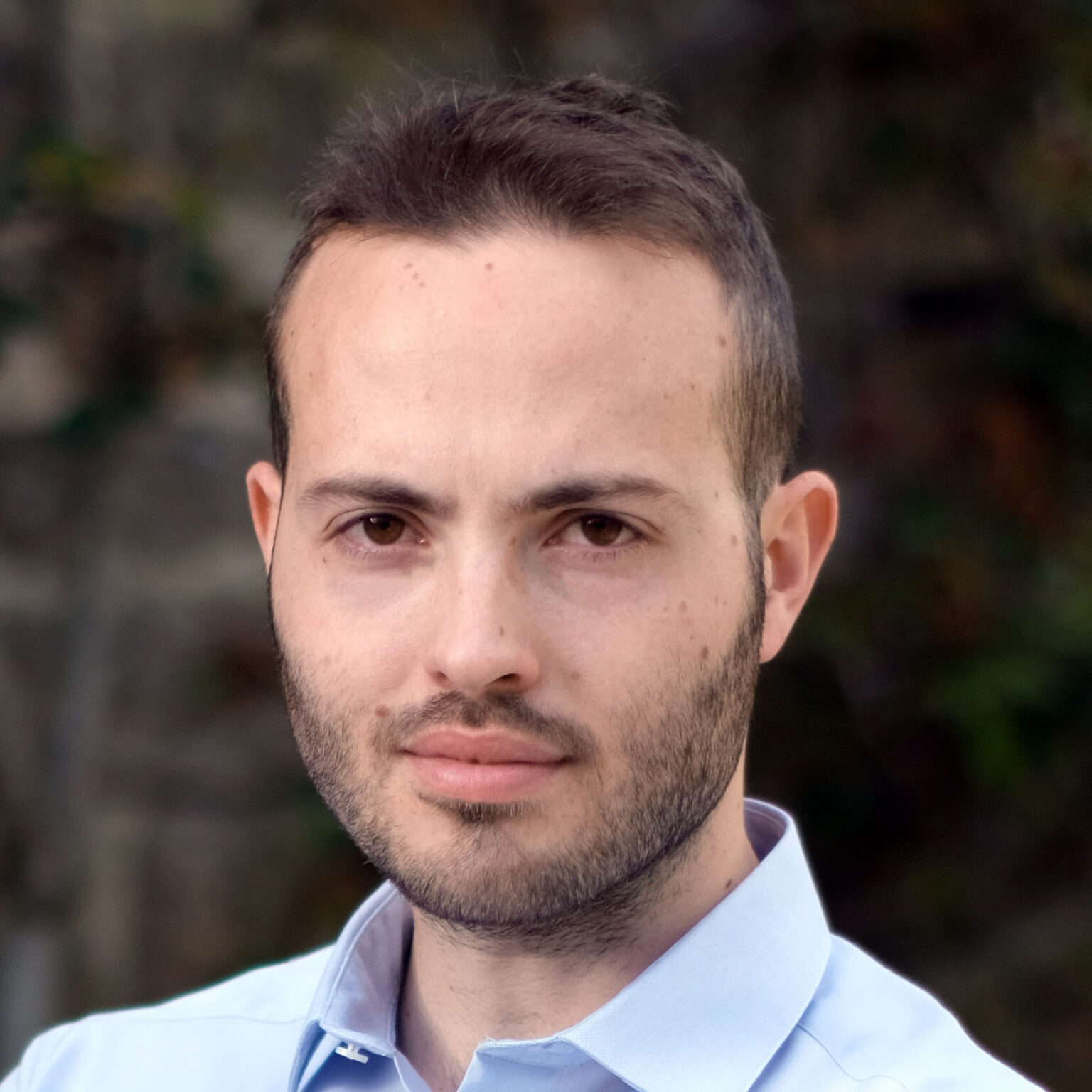
Theo Henusse · Co-director, Real French
Theo runs the production side of phonetic ear training at Real French. Near-native English speaker after six years in London, musician with a trained ear for phonetic precision. Works alongside Bernard to drill the precise sound adjustments that turn an English-accented vowel into a French one.
Want to find out which of the 14 sounds your ear is missing?
Take the three-minute diagnostic to find out which of the 14 French sounds you’re missing. Or book a free fifteen-minute call with Bernard to talk through where you actually are with French and what would close the gap fastest.
400+ students from 30+ countries · 18 years of teaching · Kerfiac, Brittany.