

French language learning
Yes, for a professional, a French immersion course in France is worth it when it removes a specific listening or speaking bottleneck. That condition matters.
By Theo Henusse · 11-minute read · Last reviewed by Bernard Henusse on 2026-06-17
In this article
- Is a French immersion course in France worth it for a professional?
- What problem does immersion solve that ordinary lessons usually miss?
- How do The 14 Sounds change what you can hear and say?
- Why does Oral Comprehension improve faster in France?
- When is immersion in France not the right investment?
- What should a diplomat or professional look for before booking?
Is a French immersion course in France worth it for a professional?
Yes, for a professional, a French immersion course in France is worth it when it removes a specific listening or speaking bottleneck.
That condition matters. A professional can spend a week in France and hear French at breakfast, in taxis, in shops, and in class, yet still return with the same blocked ear and the same careful, translated speech. More French around you does not automatically create more usable French inside you.
The investment begins to make sense when the course can name the bottleneck before it tries to fix it. Is the problem Oral Comprehension, where native-speed French collapses into a blur? Is it Oral Interaction, where you understand enough but lose accuracy as soon as a conversation becomes live? Or is the obstacle hidden lower down, in The 14 Sounds, where your ear is still treating distinct French sounds as familiar English categories?
Targeted work can matter even for adults. In Stephen Lambacher and colleagues’ 2005 study in Applied Psycholinguistics, Japanese adults who received focused perceptual training on American English vowels significantly improved both their identification of those vowels and their production of them, without separate speaking practice.
For a professional, the useful question is practical: what will be measured, corrected, and retested during the course? A serious immersion course should make the weak point visible. Then it should place pressure on it every day, with a teacher who hears the difference between a general lack of confidence and a precise sound, listening, or response problem.
If the course cannot tell you what bottleneck it is designed to change, France may give you a beautiful setting and very little progress.
What problem does immersion solve that ordinary lessons usually miss?
Ordinary lessons usually miss the listening problem underneath the speaking problem: the ear has not learned where French sound boundaries are.
You may know the word on the page. You may even know the grammar around it. Then someone says it at natural speed, and the shape disappears. The problem is often blamed on vocabulary, confidence, or lack of practice. For many English-speaking professionals, however, the first blockage is lower than that. French contains contrasts your ear may be filing into the wrong category before meaning has a chance to form.
Take the French u in tu and the ou in tout. English does not use that rounded front vowel in the same way, so the ear can treat two French sounds as one familiar English sound. Categorical perception is the name for that sorting habit. It is efficient in your native language. In French, it can erase the difference you need for Oral Comprehension. Catherine Best and Michael Tyler’s 2007 chapter in Language Learning & Language Teaching explains the Perceptual Assimilation Model: adult listeners perceive unfamiliar language sounds by matching them to the closest categories in their native language, which is why French /y/ and /u/ can be hard for many English speakers to separate.
Adult perception can be retrained. Ann Bradlow, David Pisoni, Reiko Akahane-Yamada and Yoh’ichi Tohkura’s 1997 study in the Journal of the Acoustical Society of America showed that Japanese adults trained on English /r/ and /l/ generalised their gains to new words and new speakers, and retained those gains three months after training stopped.
That is the problem immersion should attack first. The 14 Sounds give the ear a map of the contrasts French actually uses. Oral Interaction then forces those contrasts back into real speech. Until the ear can hear the boundary, the mouth keeps guessing.
How do The 14 Sounds change what you can hear and say?
The 14 Sounds change what you can hear and say by giving your ear precise French contrasts to catch, then giving your mouth a target it can repeat under pressure.
Most pronunciation advice is too vague to survive real conversation. “Open the vowel.” “Make it more nasal.” “Round your lips.” Fine, but which sound did you actually produce? Which one did you miss? The 14 Sounds make the correction small enough to hear. You stop working on “French pronunciation” as a general wish and begin hearing the difference between two neighboring sounds that your English-trained ear may have treated as the same thing.
That matters because the obstacle is perceptual before it is expressive. Paul Iverson, Patricia K. Kuhl and colleagues’ 2003 study in Cognition found that an adult listener’s native language can warp perceptual space, making some non-native contrasts fall inside one familiar category. In plain terms: you may be trying to pronounce a distinction your brain has not yet learned to separate.
Training The 14 Sounds gives Oral Comprehension a cleaner signal. A sentence that used to arrive as a blur begins to break into shapes. Not every word. Not instantly. But enough for the ear to stop panicking and start comparing what it hears against known sound categories.
Speech changes for the same reason. When the ear has a sharper model, the mouth gets better feedback. Ann Bradlow, David Pisoni, Reiko Akahane-Yamada and Yoh’ichi Tohkura’s 1997 study in the Journal of the Acoustical Society of America found that perceptual training on a difficult contrast also improved trainees’ pronunciation, even without speaking practice. For Oral Interaction, that link is crucial. You need to hear the contrast while speaking, correct it fast, and continue the conversation without retreating into English-shaped French.
Why does Oral Comprehension improve faster in France?
Oral Comprehension improves faster in France because live French keeps changing speaker, speed, room, and response. This gives your ear feedback a recording cannot provide. The same word does not arrive the same way twice. A Parisian waiter clips it. A teacher slows it down. Someone in a shop links it to the next word, and the boundary you expected disappears.
That boundary problem has a name: connected speech. In normal spoken French, sounds run together, final consonants can attach to following vowels, and syllables merge across word edges. On the page, the learner sees separate words. In the air, the ear receives one moving chain.
Recordings help, but they repeat. France does not. The brain has to compare many versions of the same sound pattern under small, constant pressure. Was that the sound from The 14 Sounds you thought you heard, or did your English ear pull it back into a familiar category? In Catherine Best and Michael Tyler’s 2007 chapter in Language Learning & Language Teaching, the Perceptual Assimilation Model explains that adult listeners tend to hear unfamiliar language sounds through the closest categories in their native language.
Live immersion gives that model a practical consequence. The ear gets corrected by reality. A sentence you expected to understand passes too quickly. Then the teacher repeats it, and later you hear the same pattern from a different mouth. Oral Interaction matters here because you cannot stay passive. You answer, mishear, adjust, and hear again. The feedback loop is tighter because the language is no longer sitting still. Pellegrino, Coupe and Marsico 2011, Language compared the information rate of seven languages and found that languages with less meaning packed into each syllable tend to compensate with a faster syllabic rate; French is one of the faster, lower-density languages, which helps explain why spoken French can outrun an English speaker’s ear even when the words are familiar.
When is immersion in France not the right investment?
Immersion in France is the wrong investment when the course lets your existing French survive untouched. That usually happens in a group.
You speak enough to participate. The teacher understands you. The other students understand you, more or less, because they often share the same foreign accent and the same missing contrasts. So the mistake stays alive. A vowel is close enough. A nasal sound passes. A rhythm that would make a French colleague pause in a meeting receives a polite nod in class.
The problem is comfort disguised as progress. In a group course, the room has to keep moving. The teacher cannot stop every time your ear misses one of The 14 Sounds, or every time your mouth replaces a French category with the nearest English one. Correction becomes general: “again,” “listen,” “more French.” Useful words, but too wide.
The specific correction matters because Flege and Bohn 2021, Second Language Speech Learning, Cambridge University Press (Revised Speech Learning Model) argues that adults can still acquire new phonetic categories when they come to perceive how a second-language sound differs from the nearest sound in their first language. A class that does not force that distinction leaves the old category in charge.
Then Oral Comprehension remains fragile. You recognize French when it is clean, slow, and expected, but lose it when a real speaker compresses the phrase. Oral Interaction suffers in the same way. You can answer, but you answer around the sound you never quite heard.
France cannot correct what the course refuses to isolate. More hours in the country only give the mistake more places to hide.
What should a diplomat or professional look for before booking?
Before booking, look for a course that turns Oral Interaction into rehearsed professional pressure: interruption, clarification, disagreement, nuance, and recovery when your French slips.
A pleasant conversation class will not tell you enough. You need to know what happens when you hesitate in the middle of a point, when someone answers faster than expected, when a question contains two possible meanings, or when your pronunciation makes a key word unstable. The course should put those moments on the table and correct them while they are happening.
Ask about format first. One-on-one work matters because professional speech is personal. Your weaknesses are not generic. Maybe you lose nasal vowels when you speak quickly. Maybe The 14 Sounds are clear in drills, then disappear when you defend an opinion. Maybe your Oral Comprehension holds in a lesson but collapses when a French speaker interrupts before you have finished building the sentence in your head.
Good Oral Interaction practice should include role-play, but not theatre. A meeting simulation has to create real constraints: limited time, incomplete information, polite resistance, and the need to respond without translating every sentence first. A negotiation needs reformulation and precision. An interview needs concise answers. A formal dinner needs timing, register, and the ability to enter a fast exchange without sounding rehearsed.
Before you pay, ask exactly how the teacher diagnoses speech under pressure. Ask whether corrections cover sound, rhythm, listening, and response strategy in the same session. Ask whether you will be pushed to repeat the same professional situation after correction, because the second attempt is where training becomes usable. Real French operates from Kerfiac, a village in Brittany, where immersion students stay at the teacher’s home for three to ten days.
The right course should leave you with more than confidence. It should leave you with tested responses your mouth can produce and your ear can monitor while the conversation keeps moving.
If something here rang true, book a free 15-minute call with Bernard.
No pitch, no commitment. We talk about where you are in French, what you have tried, and whether the work Bernard does is the right fit.
18 years · 400+ students · 30+ countries
Frequently asked questions
Is a French immersion course in France worth it for a professional?
Yes, for a professional, a French immersion course in France is worth it when it removes a specific listening or speaking bottleneck.
What problem does immersion solve that ordinary lessons usually miss?
Ordinary lessons usually miss the listening problem underneath the speaking problem: the ear has not learned where French sound boundaries are.
How do The 14 Sounds change what you can hear and say?
The 14 Sounds change what you can hear and say by giving your ear precise French contrasts to catch, then giving your mouth a target it can repeat under pressure.
Why does Oral Comprehension improve faster in France?
Oral Comprehension improves faster in France because live French keeps changing speaker, speed, room, and response. This gives your ear feedback a recording cannot provide. The same word does not arrive the same way twice. A Parisian waiter clips it. A teacher slows it down. Someone in a shop links it to the next word, and the boundary you expected disappears.
When is immersion in France not the right investment?
Immersion in France is the wrong investment when the course lets your existing French survive untouched. That usually happens in a group.
What should a diplomat or professional look for before booking?
Before booking, look for a course that turns Oral Interaction into rehearsed professional pressure: interruption, clarification, disagreement, nuance, and recovery when your French slips.
Last reviewed by Bernard Henusse on 2026-06-17.
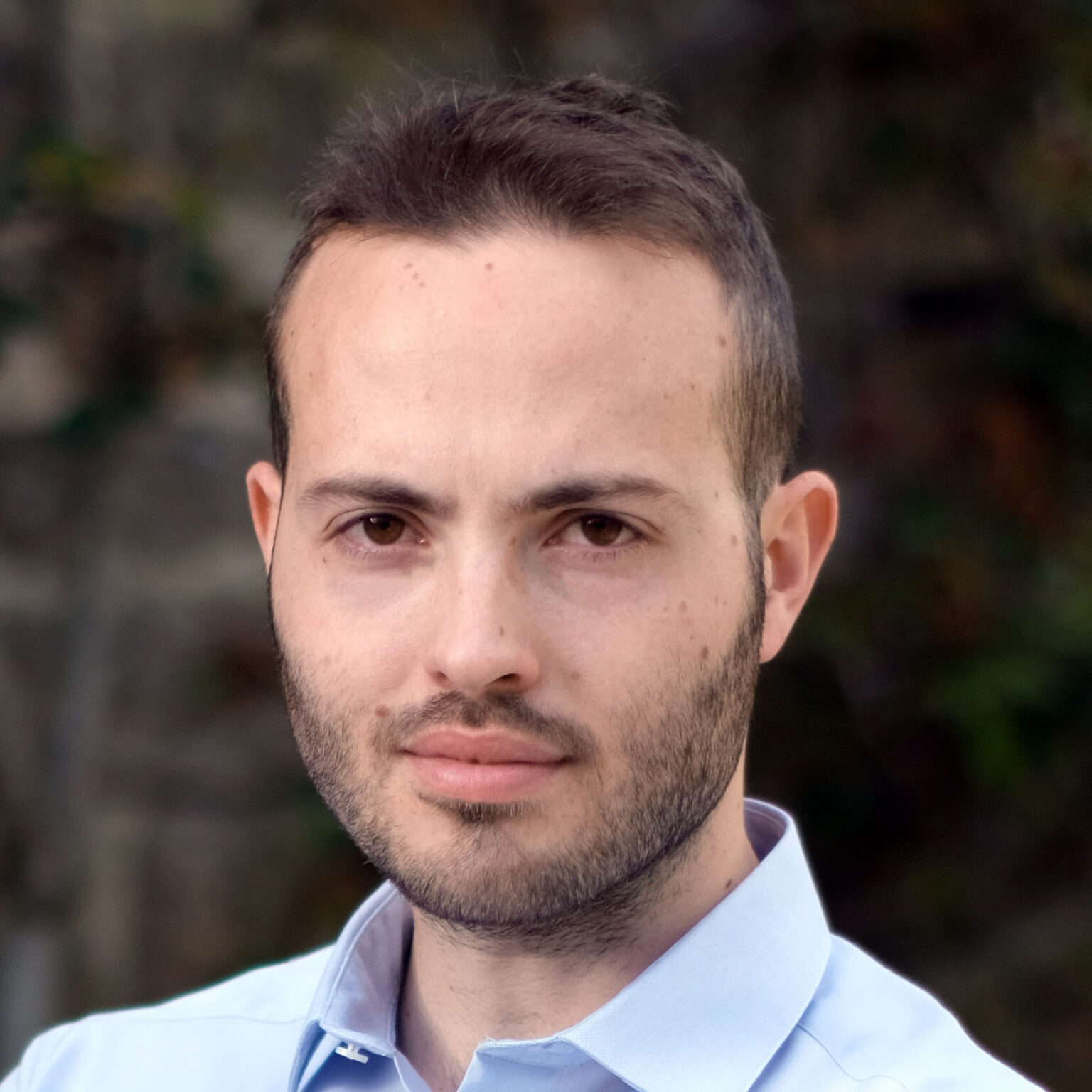
Theo Henusse · Co-director and Pronunciation Expert
Theo runs the production side of phonetic ear training at Real French. Near-native English speaker after six years in London, musician with a trained ear for phonetic precision. Works alongside Bernard to drill the precise sound adjustments that turn an English-accented vowel into a French one.
If something here rang true, book a free 15-minute call with Bernard.
No pitch, no commitment. We talk about where you are in French, what you have tried, and whether the work Bernard does is the right fit.
18 years · 400+ students · 30+ countries