
French immersion
Yes. Location matters because some places keep you in French better when your confidence drops. The postcard version is tempting. Paris or Provence.
By Theo Henusse · 12-minute read · Last reviewed by Bernard Henusse on 2026-07-14
Key takeaways
- A good immersion place is one where ordinary life keeps producing Oral Interaction with people who stay in French.
- Paris can be the best choice for access and the wrong environment for pressure.
- The environment changes how many clean, ordinary repetitions your ear gets before fatigue turns French into noise.
- The 14 Sounds fit into the location question because a place can either reinforce phonetic training all day or leave it stranded inside the lesson.
- If your priority is nightlife, major monuments, luxury shopping, or a packed calendar after class, Brittany may feel too quiet.
In this article
- What actually makes a place good for immersion?
- Why can Paris be the best choice and the wrong environment at the same time?
- What does the environment change in your Oral Comprehension?
- Where do The 14 Sounds fit into the location question?
- brittany-better-for-everyone”>Is Brittany better for everyone?
- So, does it matter where in France you do your French immersion?
Yes. Location matters because some places keep you in French better when your confidence drops.
The postcard version is tempting. Paris or Provence. Coast or countryside. Big city or beautiful village. Those things matter for the trip, of course. They change your weekends, your meals, your photos, your mood when you walk home after class. But for French immersion, the real question is simpler: when you get tired, embarrassed, or slow, does the place let you escape back into English?
Most adult learners do not fail because they refuse to speak. They fail because the environment gives them too many exits. The waiter switches. The shopkeeper answers in English. The international student beside them translates. After two or three awkward moments, English becomes the emergency door. Comfortable. Fast. Deadly for immersion.
Real immersion needs repeated Oral Interaction with people who stay with you in French long enough for your ear and mouth to work under pressure. That point is not romantic. Patricia K. Kuhl, Feng-Ming Tsao and Huei-Mei Liu, in their Kuhl et al. (2003), found that phonetic learning came through live human interaction, while the same material delivered by audio or video alone did not produce the same learning.
For a French immersion student, that difference matters. Oral Comprehension improves when French keeps arriving from real people, in real time, with the small panic of needing to answer. The 14 Sounds can be trained in class. French phonology includes 14 vowel phonemes in the standard working set often taught to English speakers, though academic counts vary with nasal vowels and regional variation. But the location decides whether the rest of the day supports that work or lets it disappear.
What actually makes a place good for immersion?
A good immersion place is one where ordinary life keeps producing Oral Interaction with people who stay in French. That is the test. Not the size of the city. Not the reputation of the region. Not how impressive the brochure looks.
You need repeated moments where French is the only practical way forward: ordering, asking again, explaining what you meant, hearing the answer, missing part of it, trying anyway. Small exchanges count because they remove the pause button. A waiter who switches to English after three seconds may be kind, but he has also ended the exercise. A shopkeeper who slows down, repeats in French, and lets you struggle a little has given you something more useful.
Adult learners often underestimate this. They look for beautiful places, famous schools, convenient train stations. All useful. None of them guarantees that your day will contain enough French pressure to change your reflexes.
The pressure matters because listening and speaking are not only intellectual tasks. Iverson et al. (2003) found that an adult listener’s native language can warp perceptual space, making some non-native contrasts harder to hear as separate sounds. In plain terms, your English ear may keep sorting French into the wrong boxes unless French keeps interrupting it.
So the best place for immersion creates daily friction without making every exchange feel like a performance. Enough French to make avoidance difficult. Enough patience from local people that you are not punished for being slow. The useful question is brutally practical: when you hesitate, will the environment hold you in French for one more sentence?
Why can Paris be the best choice and the wrong environment at the same time?
Paris can be the best choice for access and the wrong environment for pressure. It gives you almost everything a travelling adult learner wants: easy flights, serious museums, excellent restaurants, many schools, and a huge range of things to do after class.
That convenience has a cost. In Paris, the city often knows how to absorb foreigners before they have to struggle for long. Menus appear in English. Staff in hotels, shops, restaurants, museums, and stations are used to international visitors. A tired learner can complete a whole afternoon with very little French, even after paying for an immersion course.
The problem is friction. Serious adult learners need enough friction to keep Oral Interaction from becoming optional. They need the small, awkward seconds where they must finish the sentence, repair the misunderstanding, ask again, and stay inside French because the situation still demands it.
Paris can remove those seconds. Not maliciously. Quite the opposite: the city is efficient, cosmopolitan, and used to helping visitors move quickly. If your goal is culture with French classes attached, that may be perfect. If your goal is to become harder to rescue, it can be too comfortable.
Oral Comprehension suffers in the same practical way. You can choose the English audio guide, follow the bilingual sign, book the English-friendly table, and recover the meaning from context before your ear has really done the work. Paris gives you French everywhere, but it also gives you exits everywhere. For some learners, that is the hidden risk.
What does the environment change in your Oral Comprehension?
The environment changes how many clean, ordinary repetitions your ear gets before fatigue turns French into noise.
In a louder or more international setting, you can often survive by context. You catch the menu category, the pointing gesture, the familiar word at the end of the sentence. You understand enough to move on. Useful, yes. But Oral Comprehension is not only getting the general idea. It is hearing what was actually said.
A quieter, less anglophone place gives the ear a different kind of work. The same everyday French comes back again and again: the baker’s question, the bus driver’s answer, the neighbour’s greeting, the small correction when you repeat something badly. Less noise around it. Fewer English shortcuts. More chances to notice that two sounds you thought were the same are separate.
That matters because spoken French is fast for structural reasons, not because French people are being difficult. Pellegrino et al. (2011) compared seven languages and found that languages carrying less information per syllable tend to use a faster syllabic rate to compensate. French is one of those languages. Connected speech makes the problem sharper: final consonants link onto following vowels, syllables merge across word boundaries, and the word divisions you rely on when reading dissolve at natural speed. Your ear is dealing with speed and unfamiliar sound boundaries at the same time.
The 14 Sounds become easier to hear when daily life keeps feeding you clear examples. Classroom work can isolate the contrast. Oral Interaction outside class makes the contrast reappear when nobody has paused the sentence for you. A calm setting does not make French slow. It gives your brain fewer excuses to guess.
Where do The 14 Sounds fit into the location question?
The 14 Sounds fit into the location question because a place can either reinforce phonetic training all day or leave it stranded inside the lesson. The village, the city, the host family, the shop, the table after class: none of them can teach your ear by magic. A place has no method. It has pressure.
The 14 Sounds need explicit work because many adult learners are not hearing French as French yet. Best & Best & Tyler (2007) explains that adult listeners tend to hear unfamiliar foreign sounds through the closest sound categories in their native language. For many English speakers, two French sounds can collapse into one English-shaped category. Categorical perception is why French /y/ and /u/ can land in the same English phoneme bucket for many native English speakers, even when the acoustic difference is large. The mouth may copy. The ear still misses.
That is why location matters after the phonetic lesson. If you spend one hour working on a sound, then spend the rest of the day in English, the sound stays theoretical. You understood it. You may even have produced it once with help. But your Oral Comprehension has not been forced to meet it again in normal speech, and your Oral Interaction has not made you use it while asking for something real.
A stronger immersion setting keeps bringing the sound back. Not as an exercise. As a word in a sentence, a correction at lunch, a misunderstood answer, a teacher stopping you because the vowel you thought was close enough was not close enough. The place still does not train The 14 Sounds by itself. It decides whether the training gets repeated in life, where the ear has to work without a pause button.
Is Brittany better for everyone?
No. Brittany is better for a particular kind of learner: the adult who wants concentrated French, slower social pressure, and fewer easy exits into English.
If your priority is nightlife, major monuments, luxury shopping, or a packed calendar after class, Brittany may feel too quiet. Good. For some learners, quiet is the point. The day has fewer distractions competing with the work. You hear the same kinds of ordinary exchanges again and again. You buy something, misunderstand the answer, ask again, and stay in French because nobody has hurried you out of the moment.
That matters for Oral Interaction. A slower place gives you more room to be unfinished. You can hesitate without feeling that the whole city has moved on without you. You can form the sentence, repair it, hear the correction, and try again. Not as performance. As use.
Brittany also suits learners who are trying to protect their ear. When English is always available, fatigue makes the choice for you. You switch, or the person in front of you switches first. In a less anglophone setting, Oral Comprehension gets more honest. You have to listen to the French in front of you, including the endings, the vowels, the small sound differences that disappear when you are only trying to survive the exchange.
The 14 Sounds still need direct training. Brittany will not do that work for you. Real French operates from Kerfiac, a hamlet in Brittany, where immersion students stay at the teacher’s home for three to ten days. But for the right learner, the region can make the rest of the day support the training instead of diluting it.
“Key takeaways A good immersion place is one where ordinary life keeps producing Oral Interaction with people who stay in French.”
If something here rang true, book a free 15-minute call with Bernard.
No pitch, no commitment. We talk about where you are in French, what you have tried, and whether the work Bernard does is the right fit.
18 years · 400+ students · 30+ countries
So, does it matter where in France you do your French immersion?
Choose your French immersion location by naming the weakness you want the place to expose every day. Start there. If your French works in class but collapses when several people speak around you, you need conditions that keep feeding Oral Comprehension without too much background noise. If you can understand more than you can say, you need a setting that makes Oral Interaction unavoidable, again and again, in ordinary situations.
Access matters too. Some learners need a larger city because they want more school options, easier transport, medical convenience, museums, restaurants, and a wider choice of schedules. Fine. Then choose it honestly: you are buying variety and logistics. The risk is that comfort can protect the exact weakness you came to work on.
For another learner, the better choice is a smaller, less international setting where the day has fewer exits. The question is practical: will breakfast, class, the walk to buy bread, dinner, and the conversation after dinner make you use French when your sentence is slow? If yes, the place is doing useful work.
And if your main problem is pronunciation or hearing the difference between close French sounds, choose structure before scenery. The 14 Sounds need trained attention, not just more time in France. Lambacher et al. (2005) found that focused perceptual training helped Japanese adults identify American English vowels better, and their production improved without separate speaking practice. Logan et al. (1991) showed the same principle from another angle: adult Japanese listeners trained on multiple talkers’ English /r/ and /l/ improved perception and generalisation more than listeners trained on one talker. The lesson for French is simple enough: pick the place that supports the work your ear actually needs.
Frequently asked questions
What actually makes a place good for immersion?
A good immersion place is one where ordinary life keeps producing Oral Interaction with people who stay in French. That is the test. Not the size of the city. Not the reputation of the region. Not how impressive the brochure looks.
Why can Paris be the best choice and the wrong environment at the same time?
Paris can be the best choice for access and the wrong environment for pressure. It gives you almost everything a travelling adult learner wants: easy flights, serious museums, excellent restaurants, many schools, and a huge range of things to do after class.
What does the environment change in your Oral Comprehension?
The environment changes how many clean, ordinary repetitions your ear gets before fatigue turns French into noise.
Where do The 14 Sounds fit into the location question?
The 14 Sounds fit into the location question because a place can either reinforce phonetic training all day or leave it stranded inside the lesson. The village, the city, the host family, the shop, the table after class: none of them can teach your ear by magic. A place has no method. It has pressure.
brittany -better-for-everyone”>Is Brittany better for everyone?
No. Brittany is better for a particular kind of learner: the adult who wants concentrated French, slower social pressure, and fewer easy exits into English.
So, does it matter where in France you do your French immersion?
Choose your French immersion location by naming the weakness you want the place to expose every day. Start there. If your French works in class but collapses when several people speak around you, you need conditions that keep feeding Oral Comprehension without too much background noise. If you can understand more than you can say, you need a setting that makes Oral Interaction unavoidable, again and again, in ordinary situations.
Last reviewed by Bernard Henusse on 2026-07-14.
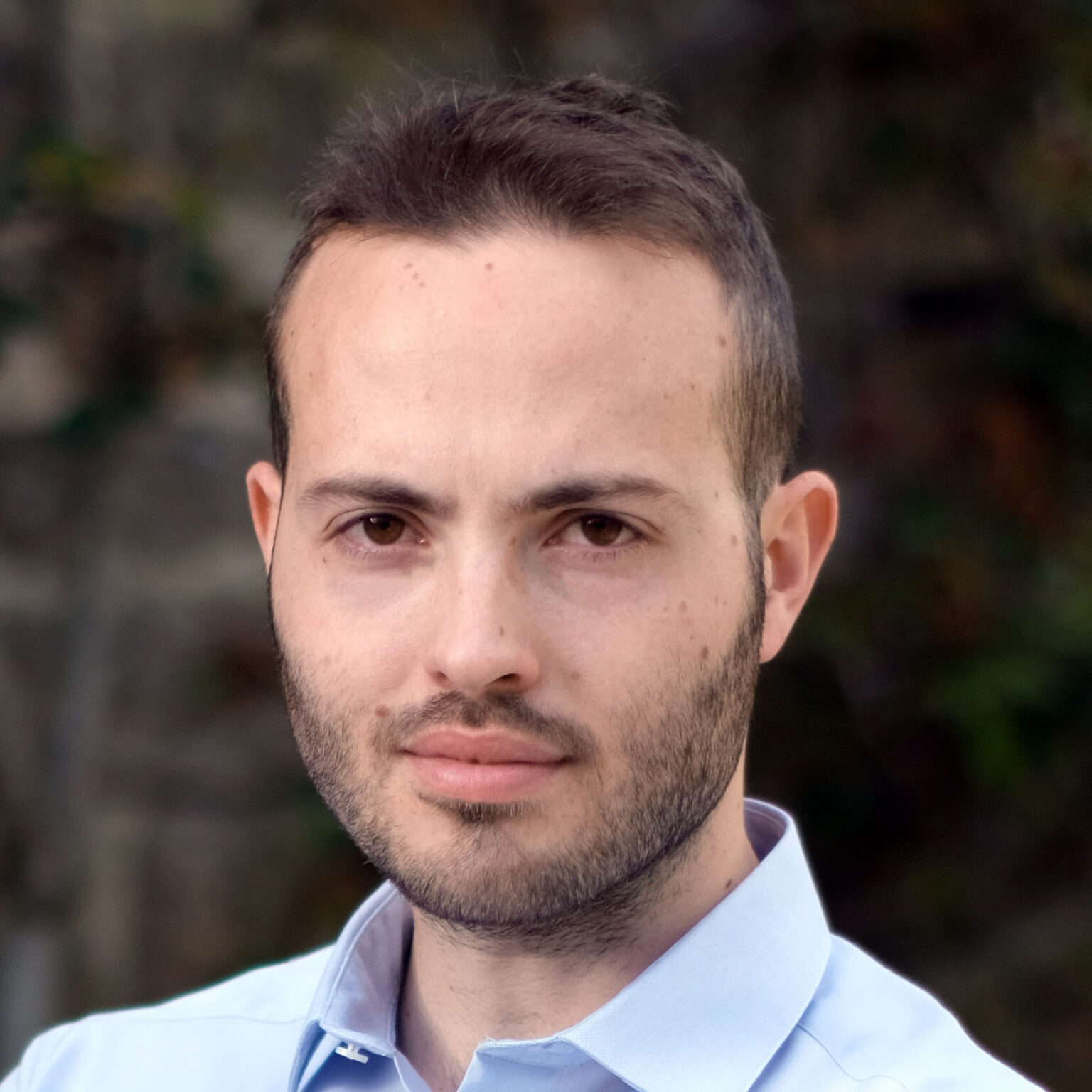
Theo Henusse · Co-director and Pronunciation Expert
Theo runs the production side of phonetic ear training at Real French. Near-native English speaker after six years in London, musician with a trained ear for phonetic precision. Works alongside Bernard to drill the precise sound adjustments that turn an English-accented vowel into a French one.
If something here rang true, book a free 15-minute call with Bernard.
No pitch, no commitment. We talk about where you are in French, what you have tried, and whether the work Bernard does is the right fit.
18 years · 400+ students · 30+ countries